



What Iran Gave the World? A Legacy Woven in Art & Textiles
The Golden Age of Persian Textiles. (1501–1736 AD)
Under the Safavid dynasty, textile production became a state-organized industry. For over 2,500 years, Iran has been a textile powerhouse, where weaving was never just a trade but a cultural language. From royal courts to everyday homes, cloth carried identity, symbolism, and power.
Persian carpets became global symbols of refinement.
- Hand-knotted (sometimes 1 million knots per rug)
- Natural dyes from plants & minerals
- Intricate medallions & garden symbolism
In Safavid courts, carpets were diplomatic gifts, shaping Europe’s perception of Persian luxury.
Qalamkar
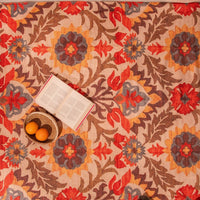
Qalamkar (or Ghalamkari) is a 400-year-old traditional Persian art of crafting patterned, hand-printed cotton textiles using carved wooden stamps and natural dyes, deeply rooted in Isfahan, Iran. Popularly used for tablecloths, bedspreads, and prayer mats.
Figural Silk - Textiles as Narrative Art
Safavid silks featured:
• Court scenes
• Polo games
• Hunters & mythical creatures
• Cypress trees & paradise gardens
Figural silk is silk fabric woven with detailed human, animal, or mythological figures, not just floral or geometric patterns.
Silk Brocade—During the Safavid era, Iran became a major silk producer.
Silk weaving became established in Iran by the 3rd century AD, and during the Sasanian era, Iran emerged as a major center of silk production and trade.
By the 16th–17th centuries:
• Gold and silver thread brocades flourished
• Persian silks were exported to Venice, the Ottoman Empire & Mughal India
Termeh - The Birthplace of Paisley
Termeh is a fine handwoven wool-silk cloth, mainly from Isfahan.
Characterized by:
• Deep jujube red, green or black grounds
• Dense woven paisley (Boteh) motifs
The Persian boteh motif traveled to Kashmir, where it flourished in Kani shawls and later inspired the European paisley pattern.
Where You Can See These Textiles Today.
1. The Metropolitan Museum of Art
2. Victoria and Albert Museum
3. National Museum of Iran
4. Museum of Islamic Art, Doha
These are not lost histories. They are preserved legacies.






Leave a comment